
Featured Solar Lighting Engineering Series
Precision-engineered solar pole lights tailored for heavy coastal salt spray, monsoon cloudiness, and high-wind tropical environments across Luzon, Visayas, and Mindanao.
The Solar Lighting Revolution Across the Philippine Archipelago
Navigating high grid tariffs, off-grid island topography, and nationwide renewable energy mandates.
Accelerating Sustainable Infrastructure under the National Renewable Energy Program (NREP)
The Republic of the Philippines stands at the forefront of the Southeast Asian green transition. With high retail electricity rates within the Meralco concession zones and remote provincial electric cooperatives (ECs), both private industrial developers and local government units (LGUs) are aggressively adopting self-sustaining off-grid lighting technologies.
Under the ambitious "Build Better More" infrastructure framework, modernizing provincial bypasses, national arterial highways, and inter-island economic corridors demands resilient illumination that does not overburden municipal power grids. The integration of CIGS (Copper Indium Gallium Selenide) solar pole lights represents the ultimate technological leap forward—eliminating underground trenching costs, substation overheads, and persistent grid blackout risks.
From the bustling economic zones of Central Luzon (Clark and Subic) and the CALABARZON industrial heartland down to emerging metropolitan hubs like Metro Cebu and Davao City, reliable solar street lighting has evolved from an environmental luxury into a vital commercial necessity.
Extreme Typhoon Aerodynamics
Unlike traditional flat solar panels that create severe wind sails during Category 4 and 5 typhoons (such as Super Typhoon Odette or Goni), cylindrical CIGS flexible modules wrap seamlessly around the pole circumference. This 360-degree aerodynamic profile reduces wind drag by more than 60%, safely withstanding typhoon-force winds up to 70 m/s (250+ km/h).
Superior Habagat Diffuse Light Capture
The Philippine rainy monsoon season (Habagat) frequently brings consecutive days of dense cloud cover and heavy rainfall. CIGS thin-film technology boasts exceptional spectral sensitivity in the blue and infrared wavebands, producing up to 35% higher energy yield in weak-light, shaded, and overcast conditions compared to conventional monocrystalline silicon modules.
C5-M Marine Coastal Anti-Corrosion
Spanning 7,641 islands, infrastructure in the Philippines suffers from aggressive tropical saline air. Our solar light poles undergo hot-dip galvanization per ASTM A123 / EN ISO 1461 standards, combined with an electrostatic fluorocarbon anti-UV powder coating to ensure over 25 years of corrosion-free service along shorelines and coastal expressways.
Engineered for Versatile Philippine Deployment Scenarios
Delivering uncompromised photometric performance and architectural beauty across diverse environments.
1. Island Eco-Resorts & Coastal Tourism
World-class tourist destinations like Boracay, Siargao, Palawan (El Nido & Coron), and Panglao demand zero-emission, visually unobtrusive lighting. Sleek CIGS pole lights blend with tropical landscapes while providing uninterrupted off-grid pathway and beachfront illumination without noisy diesel generators.
2. Expressways & National Bypasses
Conforming to DPWH (Department of Public Works and Highways) roadway safety specifications, our high-mast and CIGS pole lights offer Batwing Type II/III optical distribution for multi-lane expressways like NLEX, SLEX, CLLEX, and the Cebu-Cordova Link Expressway (CCLEX).
3. PEZA Industrial Zones & Logistics Parks
Philippine Economic Zone Authority (PEZA) industrial hubs in Cavite, Laguna Technopark, and Clark Freeport require 24/7 exterior perimeter security and internal container yard lighting with automated intelligent dimming and IoT cloud status monitoring.
4. Smart Municipalities & Barangay Roads
Enabling rural electrification programs across remote barangays without access to stable grid power. Built-in Grade A LiFePO4 batteries deliver up to 5 continuous rainy days of autonomy, ensuring public safety and community development.
5. Port Terminals & Intermodal Freight Yards
Deepwater ports in Manila International Container Terminal (MICT), Batangas Port, and Davao Sasa Port require heavy-duty high-mast lights (20m–60m) equipped with safety cage ladders and salt-fog proof LED optical fixtures.
6. Commercial Plazas & University Campuses
Modern mixed-use lifestyle districts (BGC, Nuvali, Cebu IT Park) leverage architectural flexible solar poles featuring smart IoT sensor hubs, environmental telemetry, and aesthetic 360-degree cylindrical solar wraps.
Why CIGS Cylindrical Pole Lights Outperform Monocrystalline Systems
A clear scientific and engineering comparison tailored for Philippine environmental conditions.
| Performance Metrics | CIGS Flexible Cylindrical Solar Pole | Traditional Flat Bracket Solar Street Light | Advantage for Philippine Projects |
|---|---|---|---|
| Wind Load & Typhoon Resistance | Cylindrical 360° Wrap (Up to 70 m/s / 250 km/h) | Flat Sail Area (Prone to bracket failure at >45 m/s) | Crucial for Category 5 typhoon corridors across Luzon and Eastern Visayas. |
| Weak-Light Performance (Overcast/Rain) | Superior broad-spectrum absorption (Yields +30-35% in rain) | Sharp efficiency drop-off during overcast monsoon days | Continuous lighting during extended Habagat tropical depressions. |
| Dust & Bird Dropping Accumulation | Vertical smooth surface; self-cleaning via tropical rainfall | Horizontal/Tilted flat surface traps dust, soot, and bird droppings | Virtually zero scheduled maintenance on expressways and busy roads. |
| 360° Solar Irradiance Harvesting | Continuous capture of direct, reflected, and diffuse ambient light | Requires strict single-direction azimuth orientation (South-facing) | Flexible installation regardless of roadway curvature or mountain shading. |
| Architectural & Aesthetic Appeal | Sleek, futuristic, integrated pole body (AI Smart City ready) | Bulky, awkward panel overhang with external visible wiring | Preferred by modern urban planners, luxury resorts, and high-end townships. |
About Us: Professional Outdoor Lighting Manufacturer Since 1996
Global production capability, strict German/Japanese QA standards, and proven engineering track record across over 1,700,000 installations.
Who We Are
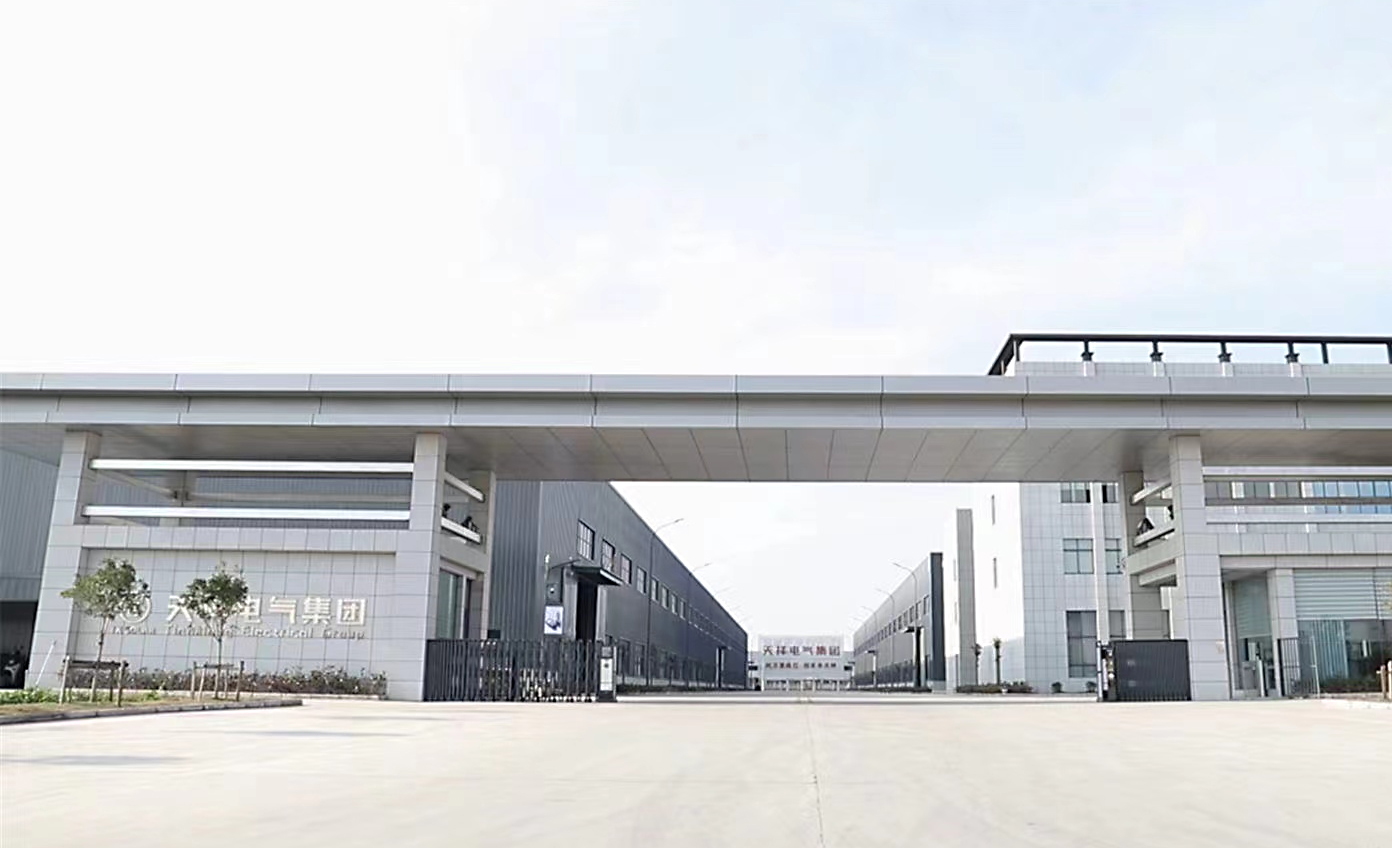
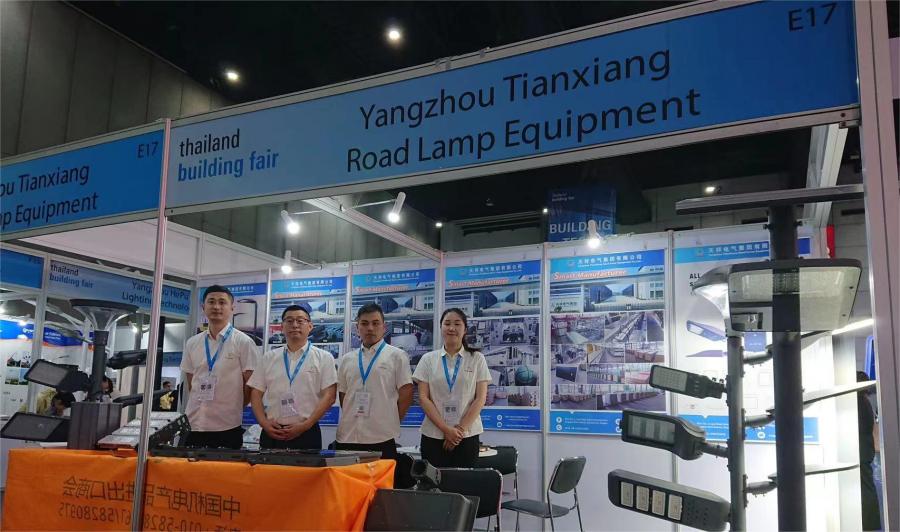
Yangzhou Tianxiang Road Lamp Equipment Co., Ltd., founded in 2008 and located in the smart Industrial Park of street lamp manufacturing base in Gaoyou City, Jiangsu Province, is a production-oriented enterprise focusing on street lamp manufacturing. At present, it has the most perfect and advanced digital production line in the industry. Up to now, the factory has been at the forefront of the industry in terms of production capacity, price, quality control, qualification and other competitiveness, with a cumulative number of lights on more than 1,700,000, in Africa and Southeast Asia, many countries in South America and other regions occupy a large market share and become the preferred product supplier for many projects and engineering companies at home and abroad.
What We Have
The company was established in 1996, join this new industrial zone in 2008. Now we have more than 200 people, R & D Personal 12 people, engineer 16 people, QC 4 people, International trade department: 16 people, sales department (china): 12 people.
Our state-of-the-art facility integrates automated laser cutting, robotic CNC welding, hot-dip zinc dipping baths, flexible CIGS laminating workshops, high-capacity LiFePO4 battery pack testing facilities, and an advanced optical darkroom laboratory.
Enterprise Culture
Guided by innovation, integrity, and relentless engineering pursuit of lighting perfection.
-


Our Mission
Continuous improvement, technological innovation, and the pursuit of 100% customer satisfaction. -


Our Vision
To be the world's leading brand in renewable energy and energy efficient lighting. -


Our Value
Open, harmonious, pragmatic and innovative.
What You Get With Tianxiang Group
We have a powerful R&D and engineer team that offer exceptional products and technical supports, and we have our own solar panel, solar battery and lighting workshops.
Direct Factory Production
Complete vertically integrated manufacturing from raw steel pole cutting, bending, and galvanizing to solar cell lamination, LiFePO4 battery BMS integration, and LED luminaire die-casting. Eliminating middlemen allows us to pass unmatched cost advantages to EPC contractors in the Philippines.
Custom DIALux Optical Simulation
Our 16-person engineering team provides free comprehensive DIALux lighting calculations, road cross-section lux simulations, and pole wind-resistance structural calculations tailored specifically to Philippine DPWH, PEZA, or private estate standards.
Dedicated Export & Logistics Service
With 16 international trade specialists, we manage complete door-to-door or CIF shipping to Port of Manila, Port of Cebu, Port of Batangas, Subic, and Davao, including complete Certificate of Origin (Form E for ASEAN tariff preferences) and Philippine customs clearing coordination.
Major Events of the Enterprise
Over 25 years of steady expansion, innovation milestones, and global market leadership.
Engineering Checklist for Philippine Solar Pole Light Procurement
Key technical specifications required by DPWH, LGUs, and private estate engineers.
1. Wind Rating Calculations
Ensure pole structural engineering calculates maximum wind load based on NSCP (National Structural Code of the Philippines). Our CIGS poles feature Q235B/Q355B high-tensile steel shafts engineered to easily resist wind gusts up to 250 km/h with minimum deflection.
2. Autonomy Days for Habagat
Standard tropical configurations should feature a minimum of 3 to 5 rainy days continuous autonomy. Our LiFePO4 battery modules operate at 95% depth of discharge (DoD) with intelligent step-down night dimming profiles (e.g., 100% brightness for 4 hrs, 50% for 4 hrs, 30% until dawn).
3. Ingress & Surge Protection
Given frequent severe tropical thunderstorms across Luzon and Visayas, all LED luminaires must hold certified IP66/IP67 waterproof ratings and integrated 10kV/20kV SPD (Surge Protection Devices) to prevent lightning-induced component failure.
Solar Pole Lights in the Philippines: Expert Answers
Everything you need to know about specifications, customs clearance, maintenance, and warranty.
Complete Industrial Outdoor & Solar Lighting Range
Explore our full line of commercial solar street lights, flexible CIGS pole solutions, and heavy-duty high-mast systems manufactured by Yangzhou Tianxiang.
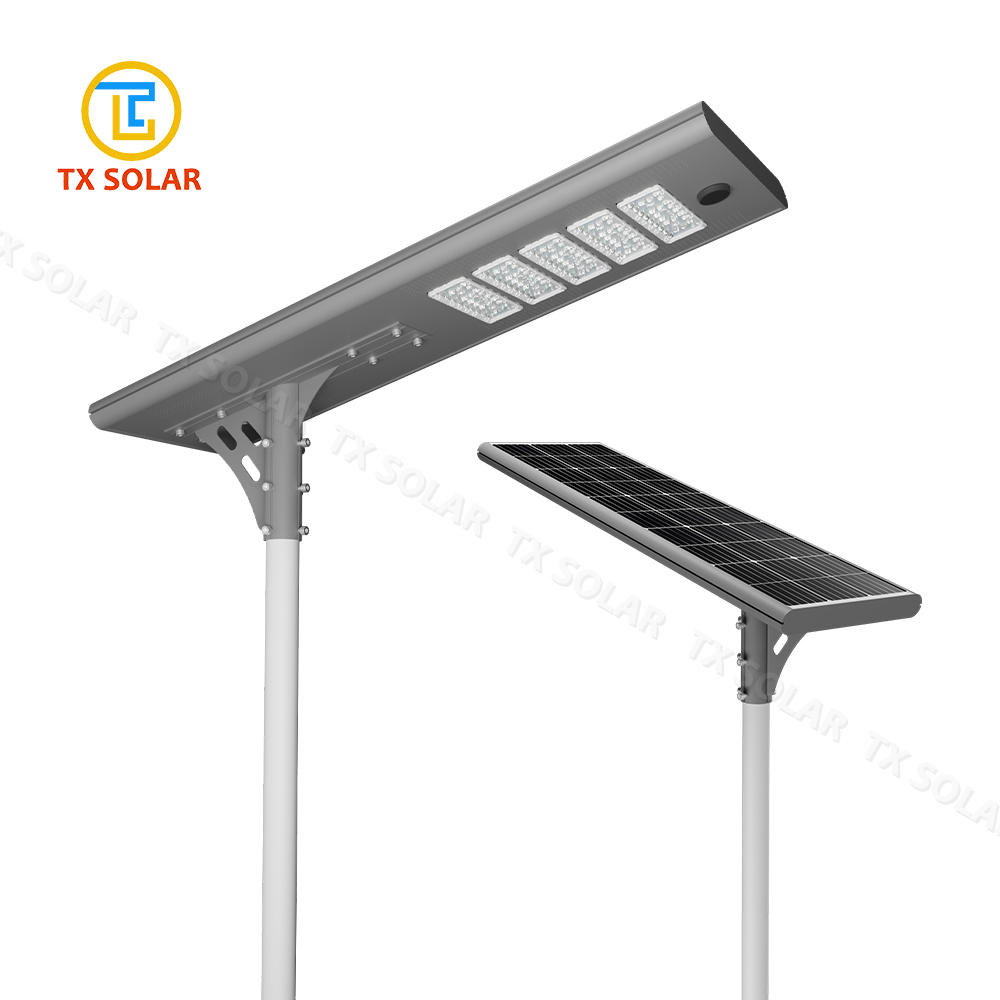
30w-100w All In One Solar Street Light
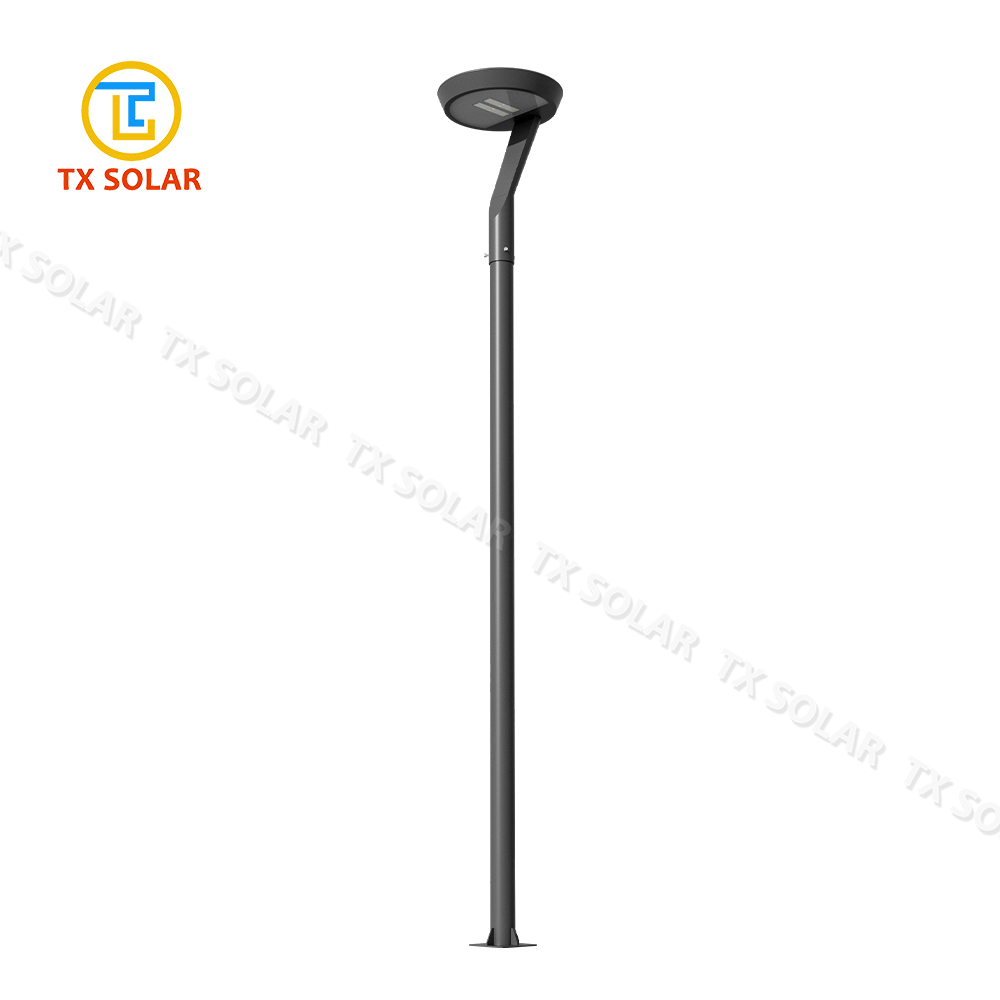
Garden Street Parking Lot Light
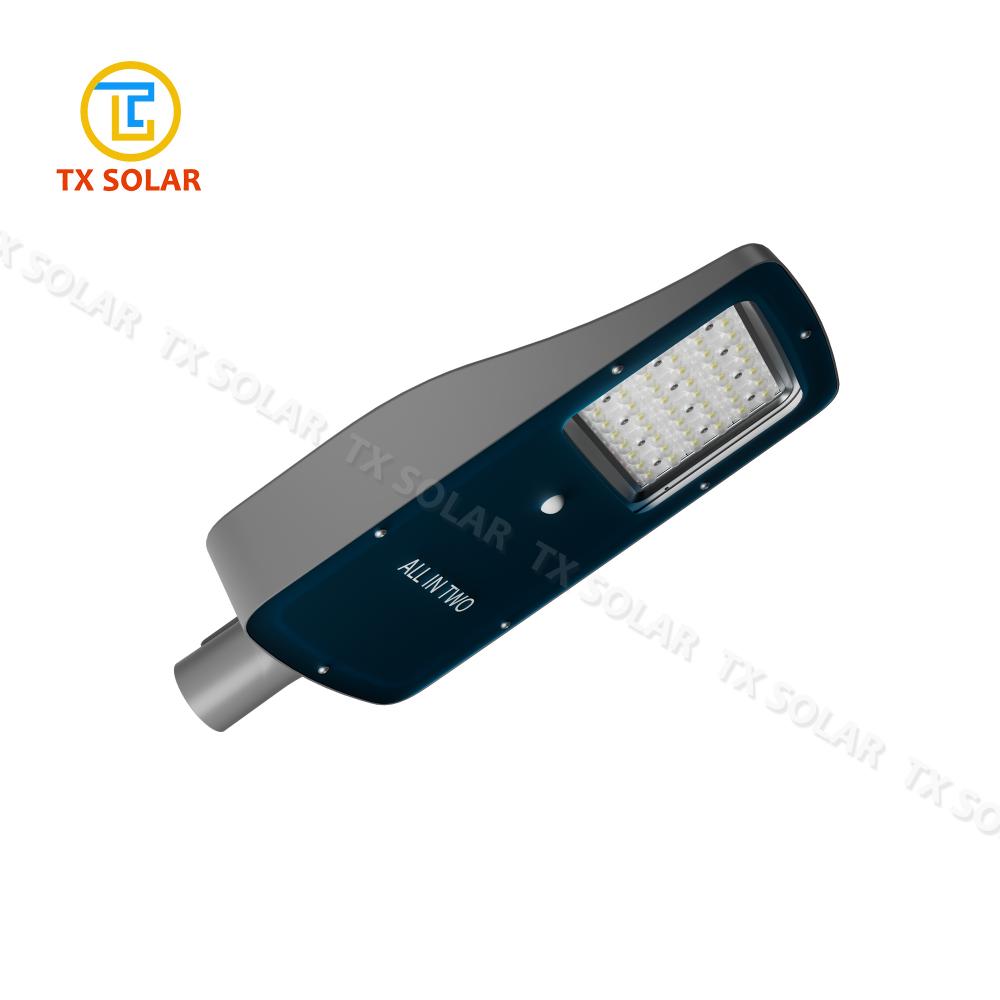
60W All In Two Solar Street Light
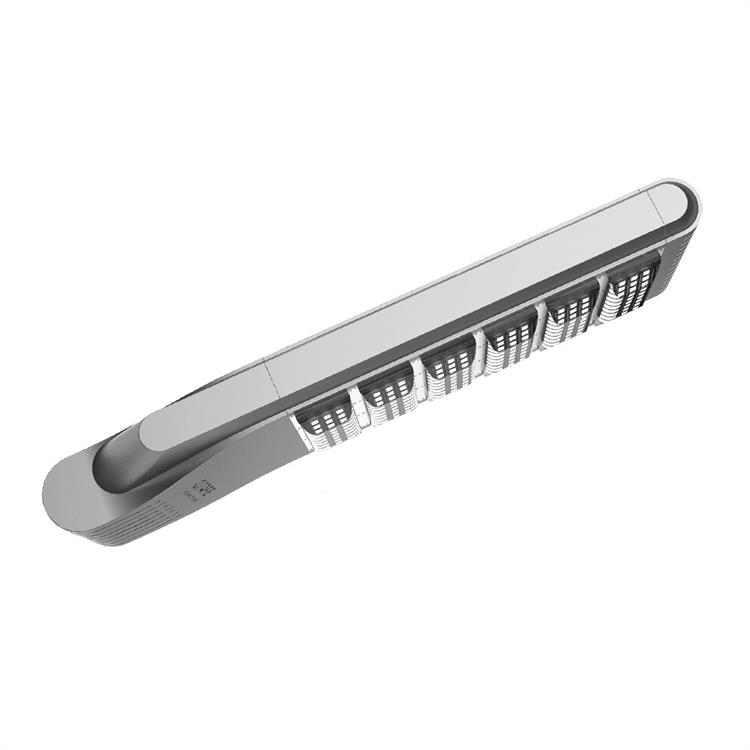
Factory price TXLED-06 LED Street Light
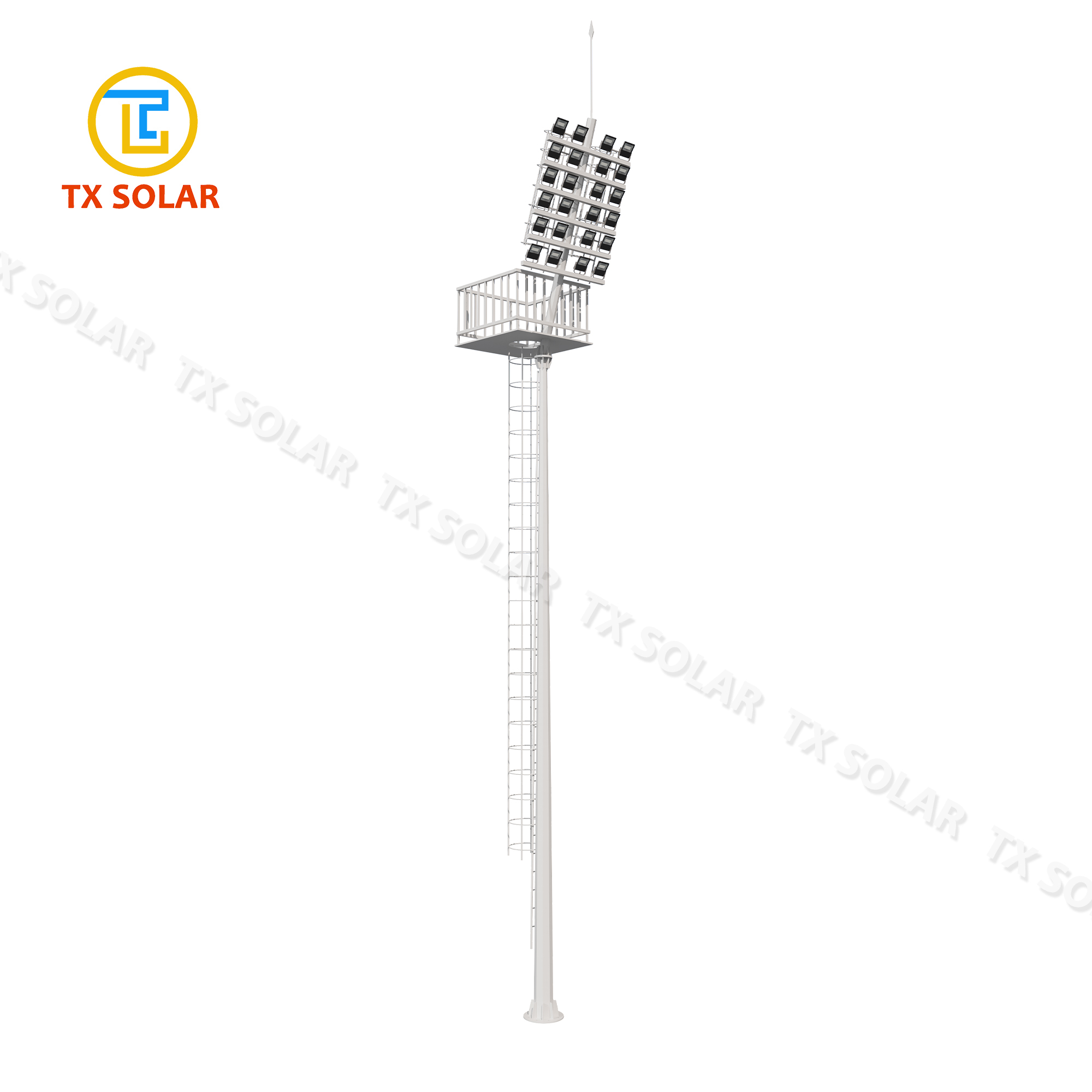
20M-60M High Mast Light with Safety Cage Ladder
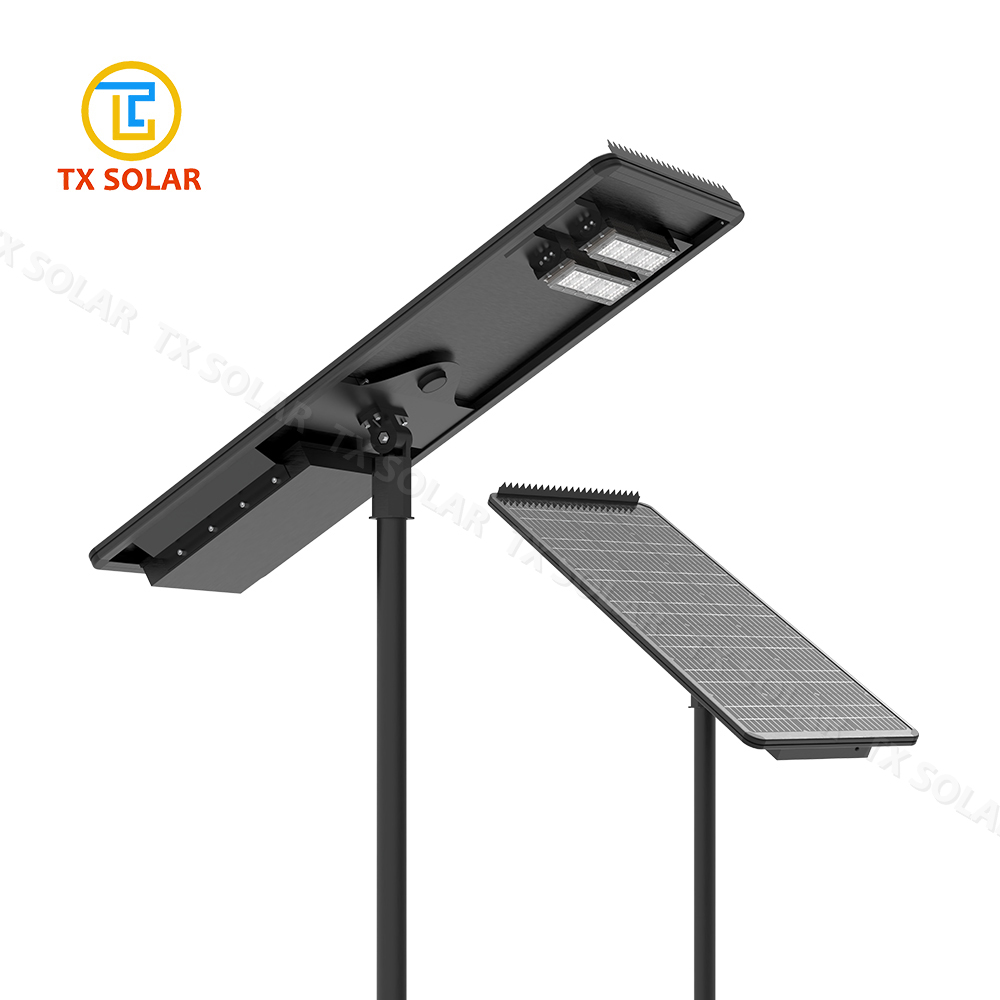
30W-150W All In One Solar Street Light With Bird Arresters
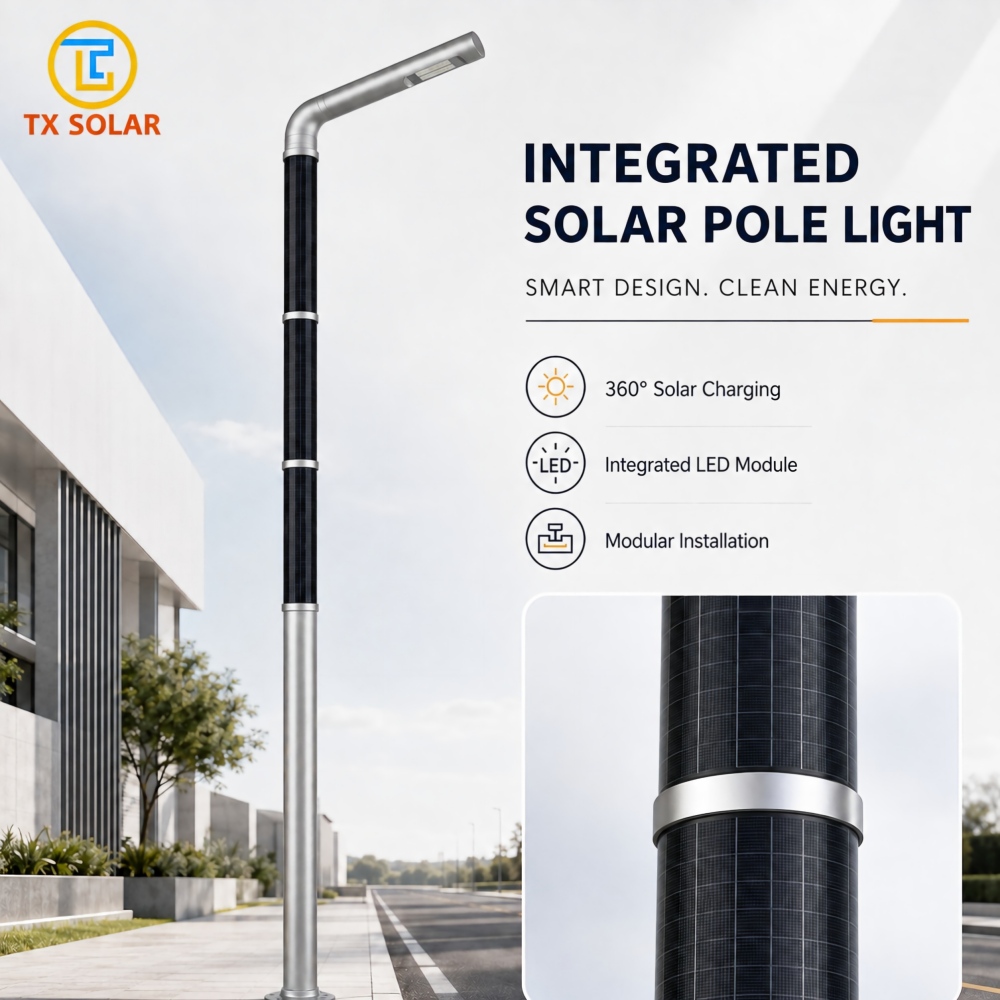
Long-life Hot Sale Solar Pole Light with Flexible Solar Panel
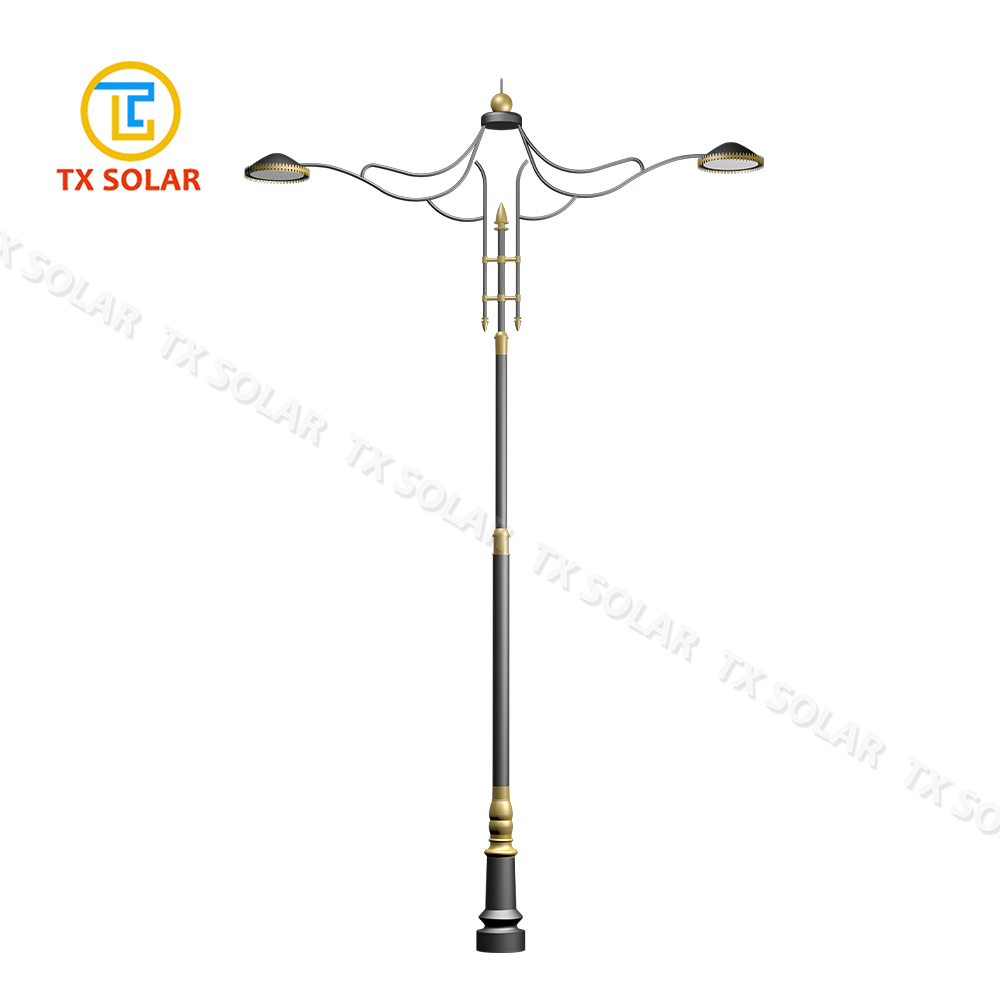
6-12M Custom Light Pole For The Middle East
-

E-mail
-

Whatsapp
-

Top


