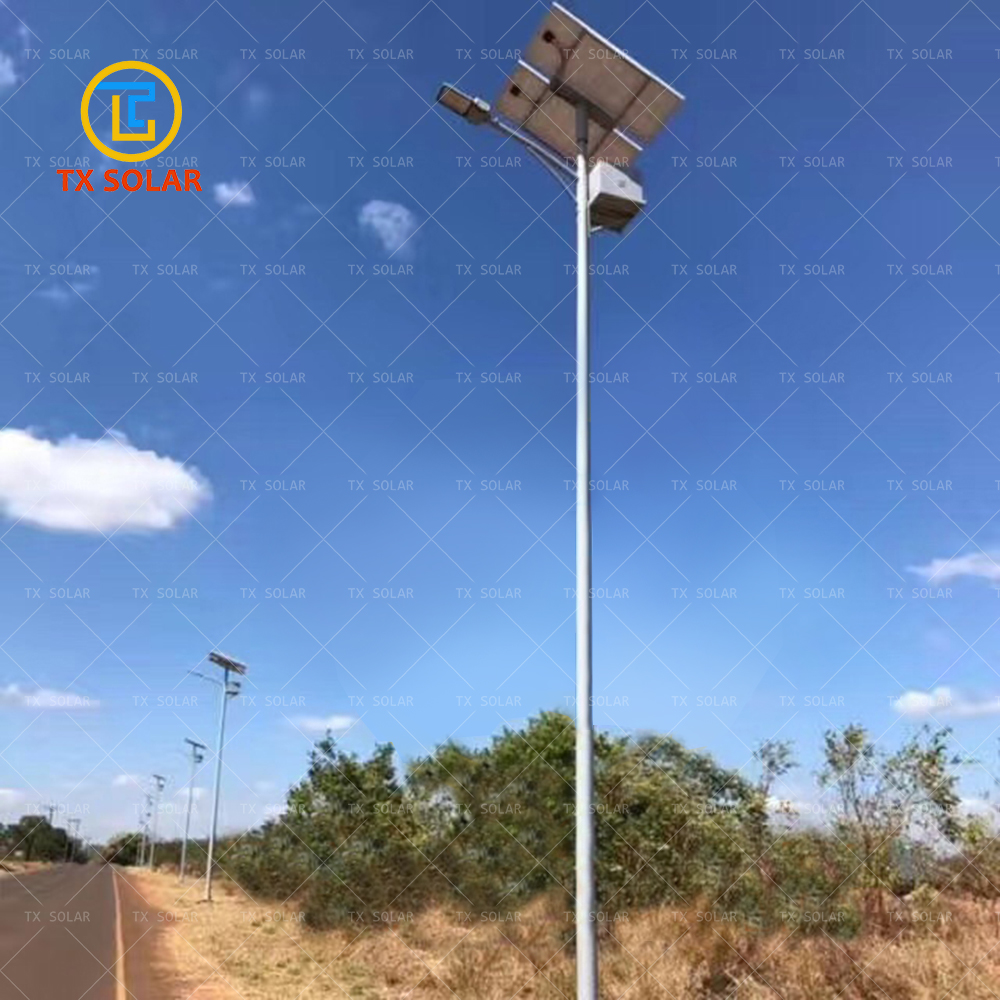
Comprehensive Guide: IoT Solar Street Lights For Public Parks And Gardens
As modern urban environments rapidly evolve toward sustainability and smart technology integration, the infrastructure powering our green spaces is undergoing a revolutionary transformation. Public parks, municipal botanical gardens, and community recreational spaces are no longer merely passive green areas; they are becoming crucial hubs for smart city technology. At the forefront of this evolution are IoT Solar Street Lights For Public Parks And Gardens—an advanced lighting solution that combines solar power harvesting, energy storage, dynamic LED optics, and Internet of Things (IoT) wireless management systems.
Traditional park lighting relies heavily on grid-connected electrical networks, which demand invasive ground trenching, extensive high-voltage cabling, and continuous operational energy expenditures. Furthermore, standard grid-tied fixtures lack intelligent responsiveness, running at fixed output power regardless of visitor traffic or atmospheric lighting conditions. By deploying IoT-integrated solar illumination, municipalities and commercial land developers can eliminate electricity costs, protect delicate ecosystems from destructive installation techniques, and improve public safety through remote automated controls.
The Commercial & Industrial Landscape of Smart Outdoor Lighting
The global market for smart outdoor lighting is witnessing an unprecedented surge, driven by net-zero carbon mandates, escalating energy costs, and municipal commitments to ESG (Environmental, Social, and Governance) targets. Commercial developers, urban planners, and municipal landscape architects are shifting away from standalone legacy solar units to interconnected, cloud-managed lighting assets.
In public park infrastructure projects, the industrial demand for IoT solar street lights centers around three primary pillars:
- Operational Efficiency and Zero Electricity Bills: Harnessing solar energy eliminates monthly utility expenses. When paired with smart IoT dimming schedules (e.g., operating at 100% brightness during peak evening foot traffic and auto-dimming to 30% after midnight), battery utilization is optimized, extending component life spans dramatically.
- Asset Preservation and Low Maintenance Overhead: Traditional solar lights required physical site visits to identify dead batteries or faulty lamp heads. Smart IoT platforms automatically send system fault alerts, battery health telemetry, and dirty solar panel notifications to a centralized desktop or mobile application.
- Non-Invasive Eco-Friendly Installation: Installing utility lines in existing parks risks damaging mature tree root systems, disturbing soil microbiomes, and requiring temporary closures of public accessways. Off-grid solar street lights require no trenching, preserving historical and botanical landscapes intact.
Deep-Dive Application Scenarios in Public Parks & Botanical Gardens
The versatility of IoT solar street lights makes them adaptable to diverse landscape topologies and functional demands within public green spaces. Below is a detailed breakdown of tailored implementation scenarios:
Eco-Sensitive Botanical Sanctuaries Bio-Protection
In nature reserves and botanical gardens, artificial night light can severely disrupt nocturnal wildlife patterns, bird migration, and insect pollination cycles. IoT solar street lights can be programmed with adaptive CCT (Correlated Color Temperature) tuning and microwave motion sensors. Lights maintain a low warm-spectrum output (2700K) at 10-20% capacity, ramping up smoothly to 100% only when human pedestrian activity is detected.
Urban Community Parks & Active Plazas Public Safety
High-foot-traffic community parks require consistent, high-CRI (Color Rendering Index) lighting to ensure visitor safety along jogging tracks, playgrounds, and plazas. Smart solar poles can be retrofitted with IoT modules that connect to SOS emergency push buttons, public Wi-Fi access points, and security cameras. Real-time data regarding light operational status ensures zero dark zones in vulnerable public areas.
Heritage Gardens & Historical Estates Zero-Trenching
Historical estates and heritage gardens often forbid ground excavation due to archaeological preservation rules or protected root systems of ancient trees. Self-contained IoT solar lights allow local authorities to add safe, elegant lighting along stone pathways and lawns without disturbing a single inch of underground soil.
Waterfront Promenades & High-Humidity Zones High Durability
Parks adjacent to lakes, rivers, or coastal marine environments face harsh atmospheric moisture, salt fog, and extreme humidity. Advanced IoT solar lighting fixtures feature hot-dip galvanized poles, IP67-rated sealed LED optics, and protective anti-corrosive powder coatings, monitored remotely to verify internal driver temperature and humidity levels.
Technical Architecture: Demystifying the IoT Solar Light System
Understanding the internal engineering of an IoT-enabled solar street light explains why it outpaces conventional lighting solutions. The unit operates as a cohesive, autonomous microgrid connected to a cloud central management system (CMS):
1. High-Efficiency Photovoltaic Module
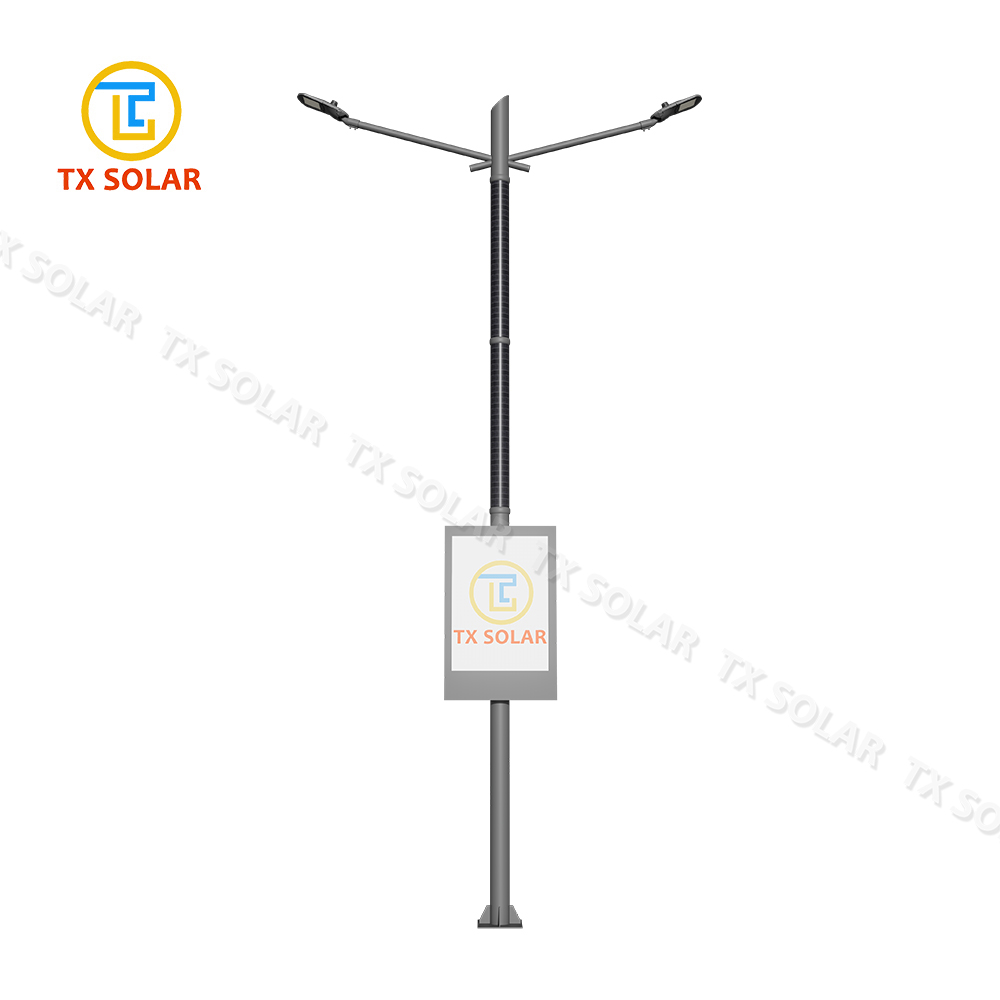
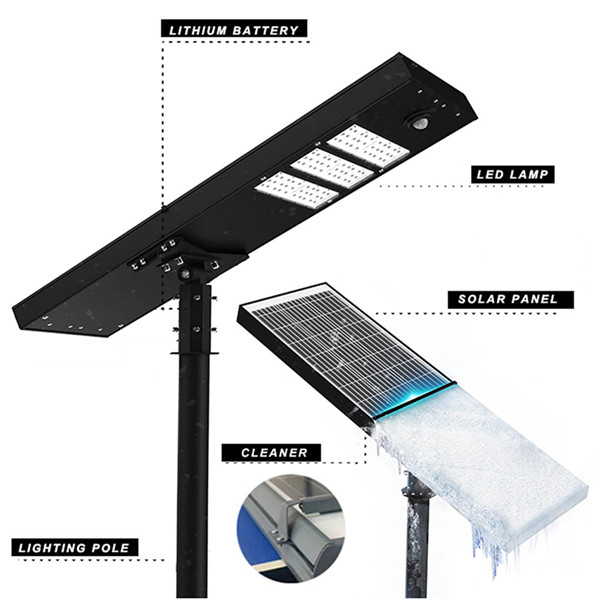
Modern solar street lights utilize high-efficiency Monocrystalline Silicon cells or multi-angle flexible solar wraps mounted directly along the pole axis. Flexible vertical panels resist wind loading, prevent snow accumulation, and deter bird nesting, ensuring continuous energy harvesting year-round.
2. Lithium Iron Phosphate (LiFePO4) Battery Matrix
Replacing legacy Lead-Acid or Gel batteries, premium LiFePO4 cells offer superior thermal stability, higher energy density, and over 3,000 deep discharge cycles. Embedded with a Smart Battery Management System (BMS), the battery communicates real-time state-of-charge (SoC), voltage, and cycle counts to the IoT gateway.
3. Smart MPPT Charge Controller with Wireless Transceiver
The Maximum Power Point Tracking (MPPT) controller dynamically adjusts electrical parameters to squeeze maximum power from the solar panel under changing sunlight conditions. Integrated into the controller is a wireless communication node (supporting NB-IoT, LoRaWAN, Zigbee, or 4G LTE) that acts as the communication link between the physical fixture and the cloud server.
4. Centralized Management Software (CMS) Cloud Platform
The web-based CMS grants facility engineers full visual control over entire city park networks on a single dashboard. Operators can visualize fixture locations via GIS maps, schedule customized lighting curves (e.g., 100% for 3 hours after dusk, 50% for 4 hours, 30% with motion boost until dawn), evaluate total energy savings, and receive instant alerts if a pole experiences physical tilting or lamp failure.
Economic Evaluation: Capex vs. Opex Advantages
While the initial capital expenditure (Capex) of an IoT solar light fixture may appear higher than a basic grid-tied fixture, a holistic Total Cost of Ownership (TCO) analysis reveals dramatic financial savings over a 5- to 10-year lifespan:
- Elimination of Trenching & Wiring Costs: Underground conduit installation in public parks typically costs between $30 to $80 per linear meter, depending on terrain complexity. Off-grid solar eliminates 100% of these civil engineering expenses.
- Zero Utility Charges: Direct operating expenses (Opex) for electricity drop to zero dollars, insulating municipal budgets against volatile utility tariff increases.
- Predictive Maintenance Savings: Automated IoT diagnostic reports eliminate routine physical night patrols. Maintenance teams are dispatched only when specific components require attention, armed with precise failure data.
Future Industry Trends in Smart Park Infrastructure
Looking ahead, IoT solar street lights in public parks are expanding beyond illumination to serve as the core backbone for broader smart city deployments:
AI-Driven Adaptive Dimming: Integration of machine learning algorithms that analyze historic foot traffic data, local weather forecasts, and calendar events to automatically calculate optimal battery discharge profiles, ensuring zero blackout nights even during extended rainy seasons.
Multi-Sensor Smart Poles: Transforming lighting poles into environmental monitoring stations equipped with sensors for particulate matter (PM2.5 / PM10), ambient temperature, humidity, noise levels, and UV index. The gathered environmental telemetry can be shared with park visitors via real-time digital screens mounted on the light poles.